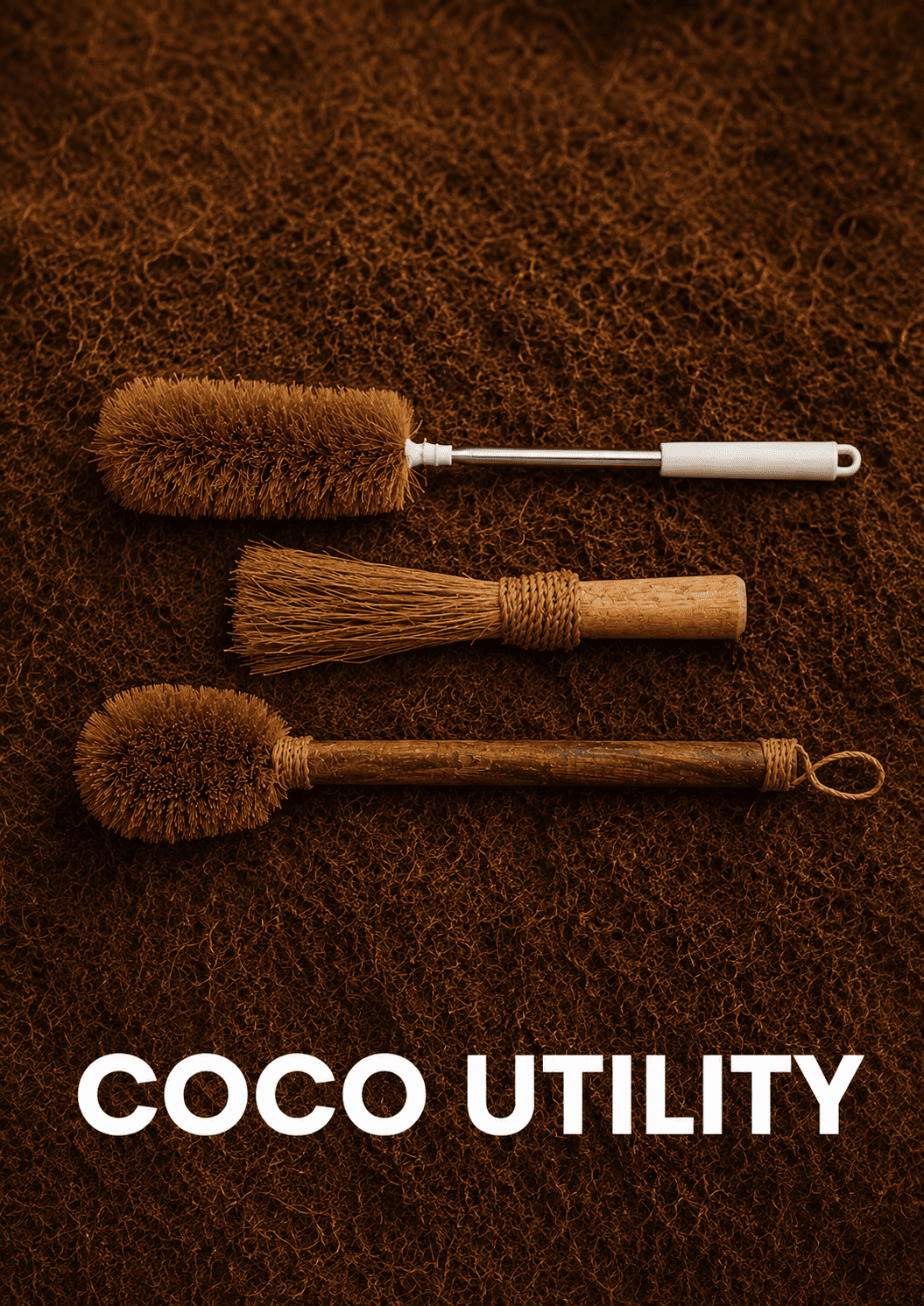
A coir cleaning brush is a scrub brush made from coconut husk fiber, typically mounted on a wood or plastic handle. Its stiff, coarse bristles make it suited to scrubbing tasks that softer synthetic brushes struggle with.
How Coir Brushes Are Made
Coir brushes start with the same raw material as coco peat and coir fiber: the husk of the coconut. After the husk is collected, it goes through a traditional process common across coir-producing regions, retting (soaking the husk in water to soften it), followed by decorticating to separate the fiber, according to a description of the coir brush production process from Source For Future, an ethical sourcing platform documenting small-scale coir manufacturing in southern India.
Once separated, the fiber is beaten, then combed by hand to align and clean it before it is ready for brush-making. The bristles are then fixed into a handle, commonly wood, using small steel pins to hold the fiber in place. This combination of a natural fiber head and a sturdier handle is what gives coir brushes their characteristic stiffness and durability compared to many synthetic alternatives.
Common Uses for Coir Brushes
Kitchen Cleaning
The coarse bristle texture is effective for scrubbing pots, pans, and dishes, particularly for baked-on or stuck food that softer sponges struggle to remove.
Produce Scrubbing
A coir brush's firm bristles work well for scrubbing dirt from root vegetables and firmer produce before cooking.
Floor and Surface Cleaning
The same scrubbing action that works in a kitchen sink is effective on tile, stone, and other hard flooring surfaces.
Shoe and Boot Cleaning
Coir's stiffness makes it effective for scraping dried mud and dirt from shoe soles and treads, a related use case to the coir doormats covered in our guide to coir doormat benefits and disadvantages.
Personal Care
Softer-bristled coir brushes, often mounted on a smaller handle, are used as foot and body brushes for exfoliation, a lighter-duty application than kitchen or floor scrubbing.
Coir Brush vs. Synthetic Brush
The main tradeoff between a coir brush and a plastic-bristled alternative comes down to material origin and end-of-life disposal rather than cleaning performance alone. Coir is a renewable byproduct of the coconut industry and is biodegradable, while synthetic bristle brushes are typically petroleum-based and do not break down.
For buyers or retailers positioning products around sustainability or reduced plastic use, this is usually the primary selling point rather than a claim that coir outperforms synthetic bristles on every cleaning task.
What This Means for Bulk Buyers
For businesses sourcing coir brushes for retail or distribution, a few questions are worth confirming with a supplier:
- How is the bristle fixed to the handle? Pinned, stitched, or glued attachments differ in durability, and a poorly fixed bristle head will shed fiber or loosen faster than a properly pinned one
- What handle material is used, and is it treated to resist moisture damage over repeated wet use?
- Is bristle density consistent across a bulk order? Inconsistent fiber density affects both scrubbing performance and how long individual units last
- What grade of coir is used for the bristles, since coarser, stiffer fiber suits heavy-duty scrubbing while finer fiber suits lighter-duty personal care brushes
Sourcing Coir Brushes in Bulk
Cocovex supplies coir brush products manufactured in Indonesia for wholesale and export markets. Get in touch to discuss handle options, bristle grade, and volume requirements for your order.
Ready to Source?
Get Coir Brushes, Direct from Indonesia
Request a sample, get a custom quote, or speak with our export team about handle options, bristle grade, and volume for your order.