Understanding what the research actually shows, rather than relying on general marketing claims, is what separates a specification decision made with confidence from one that gets revisited mid-project.
Why Coir Outlasts Other Natural Fibers
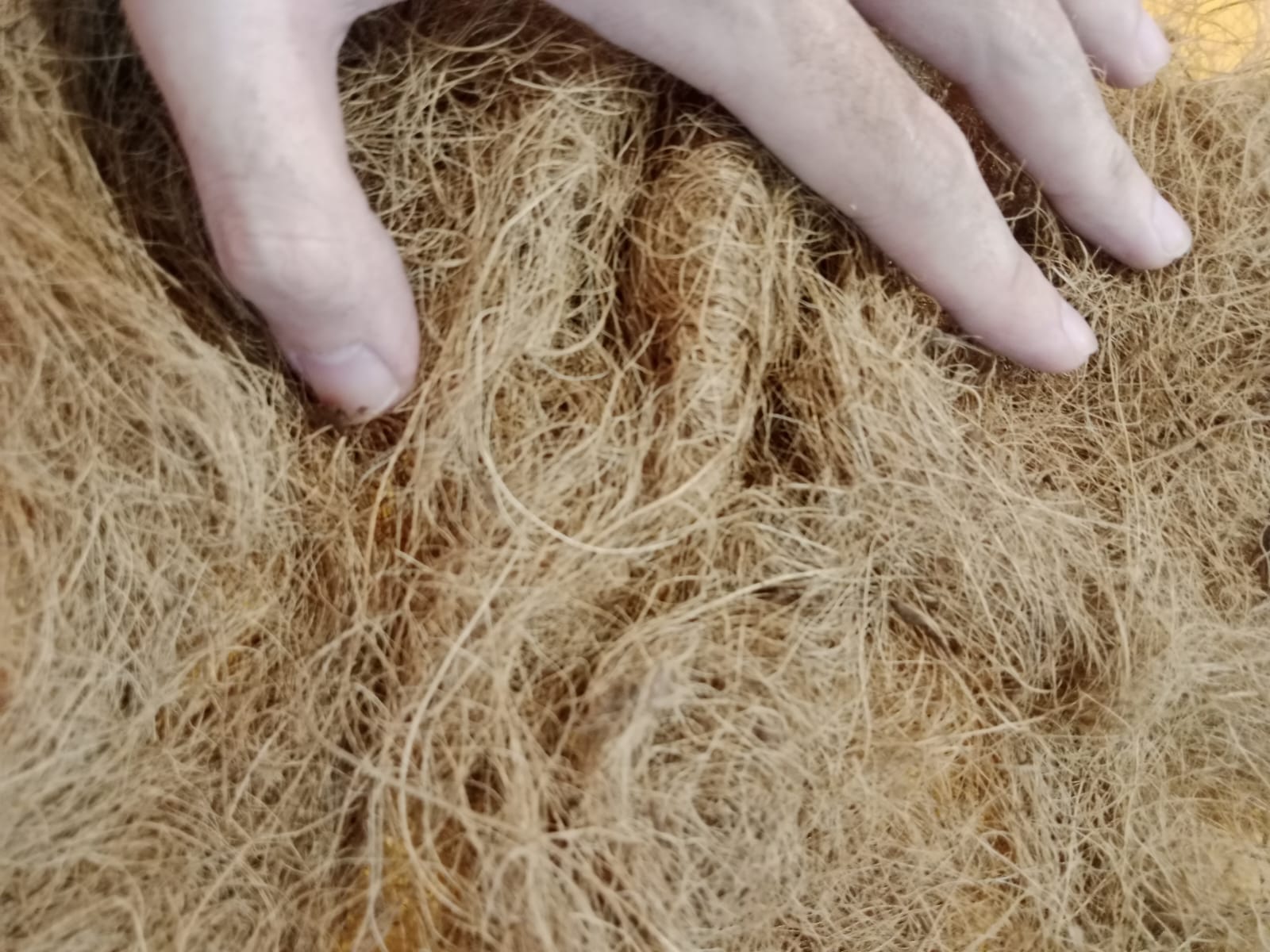
Not all natural fiber geotextiles behave the same way once installed. Coir consistently outperforms other natural fibers like jute in durability, and the reason comes down to composition. Coir has the highest lignin content among common lignocellulosic fibers, which accounts for its high rigidity, strength retention, and resistance to microbial degradation compared to other natural geotextiles, according to research on coir geotextile durability published in the Geotextiles and Geomembranes journal via ScienceDirect.
This is why coir is the natural fiber most often specified for erosion control applications where the material needs to hold soil in place for more than a single growing season, unlike jute, which biodegrades considerably faster.
What the Field Data Actually Shows
Independent testing tells a more nuanced story than most supplier marketing suggests, and it is worth understanding before specifying a product.
A comparative study testing jute and coir geotextiles at different fabric weights, 500 g/m² jute, 700 g/m² coir, and 400 g/m² coir, under both laboratory and field slope conditions, found that fabric weight had a bigger effect on erosion control performance than fiber type alone. The heavier coir product (700 g/m²) outperformed the lighter coir product (400 g/m²) by a meaningful margin, and the jute product tested actually slightly outperformed the heavier coir on both measured metrics under laboratory conditions, according to a study on the impact of coir geotextiles on soil erosion and surface runoff. This actually reinforces the core point rather than undercutting it: a lighter jute product outperforming a heavier coir product shows that fabric weight and construction, not fiber type alone, is what buyers should evaluate first.
The practical takeaway: the weight and density specification of a coir product matters as much as, or more than, the fact that it is coir at all. A lightweight coir mat and a heavy-duty coir geotextile are not interchangeable, even though both are technically "coir."
The Commonly Cited Lifespan Range
Across industry and field literature on erosion control, a coir geotextile lifespan of roughly two to five years before full biodegradation is a widely repeated figure, generally tracing back to older field and incubation studies on coir strength retention over time. This range should be treated as a general planning benchmark rather than a guaranteed timeline for any specific product, since actual longevity depends on the fabric weight, installation conditions, soil moisture, and climate, factors the research above shows can meaningfully change performance.
Coir vs. Synthetic Geotextiles: An Honest Comparison
Coir Geotextile
Protects the slope only as long as needed for vegetation to establish, then decomposes into organic matter that feeds the soil it protected. The right choice for revegetation projects, but not for applications requiring multi-decade structural stability without replacement.
Synthetic Geotextile
Made from polypropylene or polyester, can remain intact for decades, which sounds like an advantage until the disposal question comes up. Synthetic materials eventually fragment into microplastics that persist in the soil rather than breaking down, a tradeoff increasingly relevant for projects with environmental compliance requirements.
| Property | Coir | Synthetic |
|---|---|---|
| Typical functional lifespan | ~2 to 5 years | Decades |
| End state | Decomposes into organic matter | Fragments into microplastics |
| Best suited for | Revegetation, single-cycle slope protection | Long-term structural stability |
| Environmental compliance fit | Favorable for biodegradable requirements | May raise microplastic concerns |
What This Means for Specifying Coco Fiber Products
For landscaping contractors and engineers sourcing coir erosion control material, a few practical questions follow from the research above:
- What is the fabric weight (g/m²), not just the material type? This affects performance more than most product descriptions suggest.
- Is the product retted properly? Poorly processed fiber degrades faster and less predictably than fiber that has undergone full retting.
- What soil and slope conditions is the product rated for? A product tested on gentle slopes may not perform the same on steep embankments.
- What is the expected timeline for vegetation establishment on this specific site? The product's lifespan should comfortably exceed this window, not just meet it.
Sourcing Coco Fiber for Erosion Control Projects
Cocovex supplies coco fiber processed in Indonesia for erosion control, landscaping, and industrial applications. Get in touch to discuss fabric weight and specification requirements for your project.
Ready to Source?
Get Coco Fiber Built to Your Fabric Weight Spec
Request a sample, get a custom quote, or speak with our export team about fabric weight and retting requirements for your project.