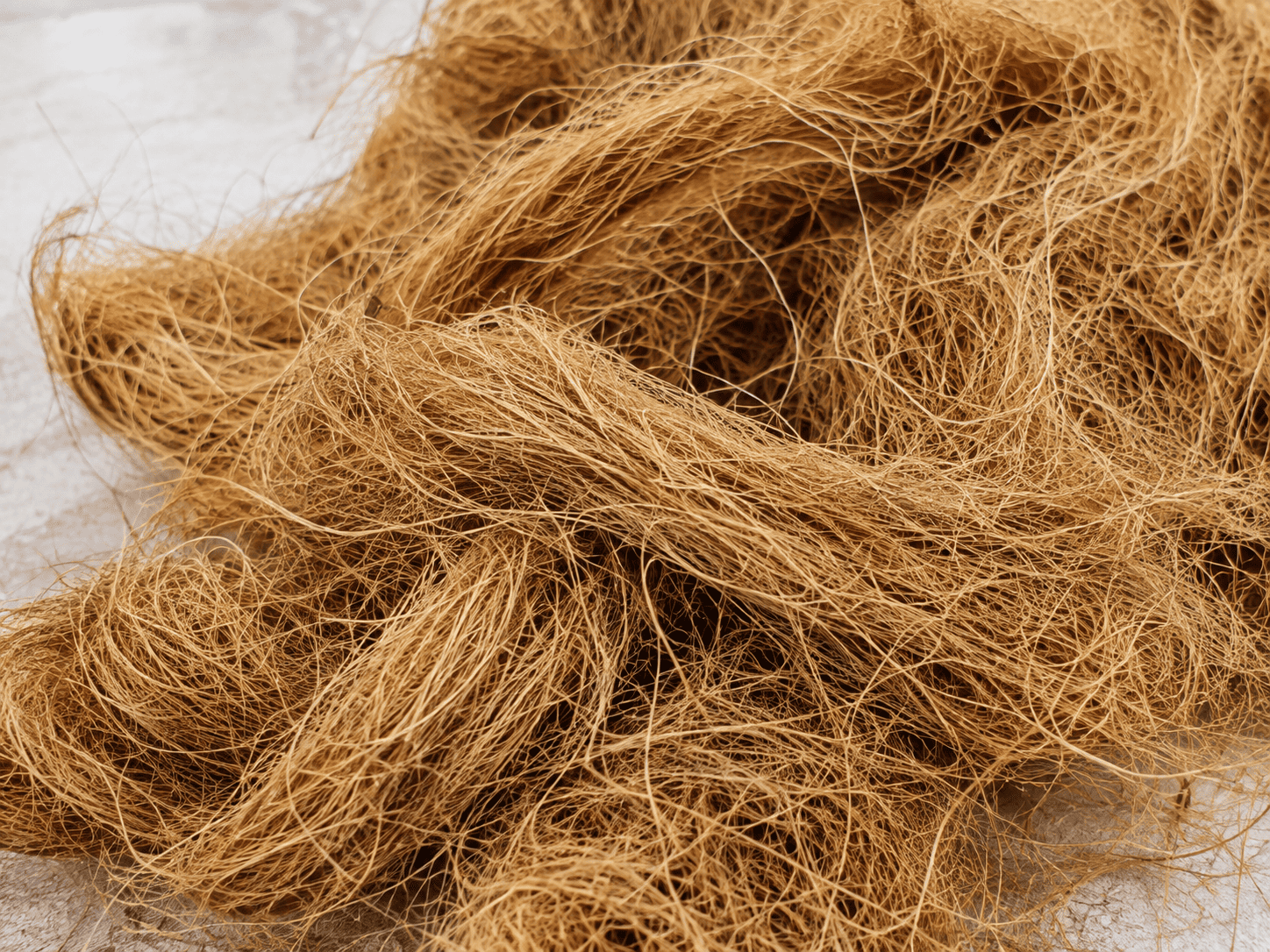
For buyers new to sourcing coir fiber, understanding which grade and processing method suits each application is more useful than simply looking at a general list of what coir can be used for.
Industrial Fiber Applications
Mattress & Upholstery Manufacturing
Rubberized coir, made by bonding coir fiber with natural latex, has a long history as upholstery padding. It was historically adopted by automotive manufacturers as an alternative to horsehair for seat cushioning. Today, rubberized coir remains relevant in mattress manufacturing because of its breathability, firmness, and natural durability.
Automotive Interior Components
Coir fiber composites can be used in door panels, trunk liners, and acoustic insulation. Interest in these applications has grown partly because natural fiber composites can offer a lower environmental footprint than glass-fiber-reinforced alternatives.
Construction & Insulation
Coir fiber's structural properties and natural resistance to moisture and decay make it suitable for insulation panels and as a reinforcing additive in composite building materials.
Landscaping & Erosion Control
Coir fiber is widely used in geotextiles, coir logs, mats, and mulch products for slope stabilization and erosion control.
For landscaping and civil engineering projects, the right coir product depends on factors such as fabric weight, fiber grade, and the specific conditions of the site. For more information, see our guide to coco fiber for erosion control .
Home, Commercial & Agricultural Goods
Cordage & Rope
White coir, the finer and more flexible fiber, is traditionally used to produce rope, twine, and cordage. It is valued for its natural resistance to saltwater degradation.
Brushes & Mats
Coarser brown coir fiber is commonly woven or compressed into doormats, scrub brushes, and industrial cleaning pads because of its durability and abrasion resistance.
Agricultural Byproducts
Fiber processing byproducts can be used in organic fertilizer blends, taking advantage of coir's natural potassium content to support root and stem development.
Fiber Grades: What Determines the Application?
Not all coir fiber is interchangeable. Grade is one of the main factors determining which application a particular fiber is suited for.
Bristle Fiber
A longer, coarser fiber extracted primarily from mature brown husks. It is commonly used for brushes, rope, and industrial applications where strength and rigidity are important.
Mattress Fiber
A shorter fiber found closer to the inner layers of the husk. It is used for mattress padding, upholstery, and composite panel manufacturing.
Buyers sourcing fiber for a specific application should confirm which grade a supplier is quoting. Bristle and mattress fiber differ meaningfully in length, flexibility, and appropriate end use.
What This Means for Buyers
For businesses sourcing coir fiber at scale, several practical questions can help match the product to the intended application:
- What fiber grade does the quote refer to? Confirm whether the material is bristle fiber or mattress fiber.
- What is the intended application? Rubberized and composite applications may require different processing specifications from raw fiber used for rope or mats.
- What is the fiber's origin and processing method? These factors can affect consistency, particularly for manufacturing applications with tight specification tolerances.
Sourcing Coco Fiber for Your Application
Cocovex supplies coco fiber processed in Indonesia for erosion control, industrial, and commercial applications. Get in touch to discuss your required fiber grade and volume.
Ready to Source?
Find the Right Coco Fiber Grade for Your Application
Discuss your fiber grade, processing, volume, and application requirements with our export team.