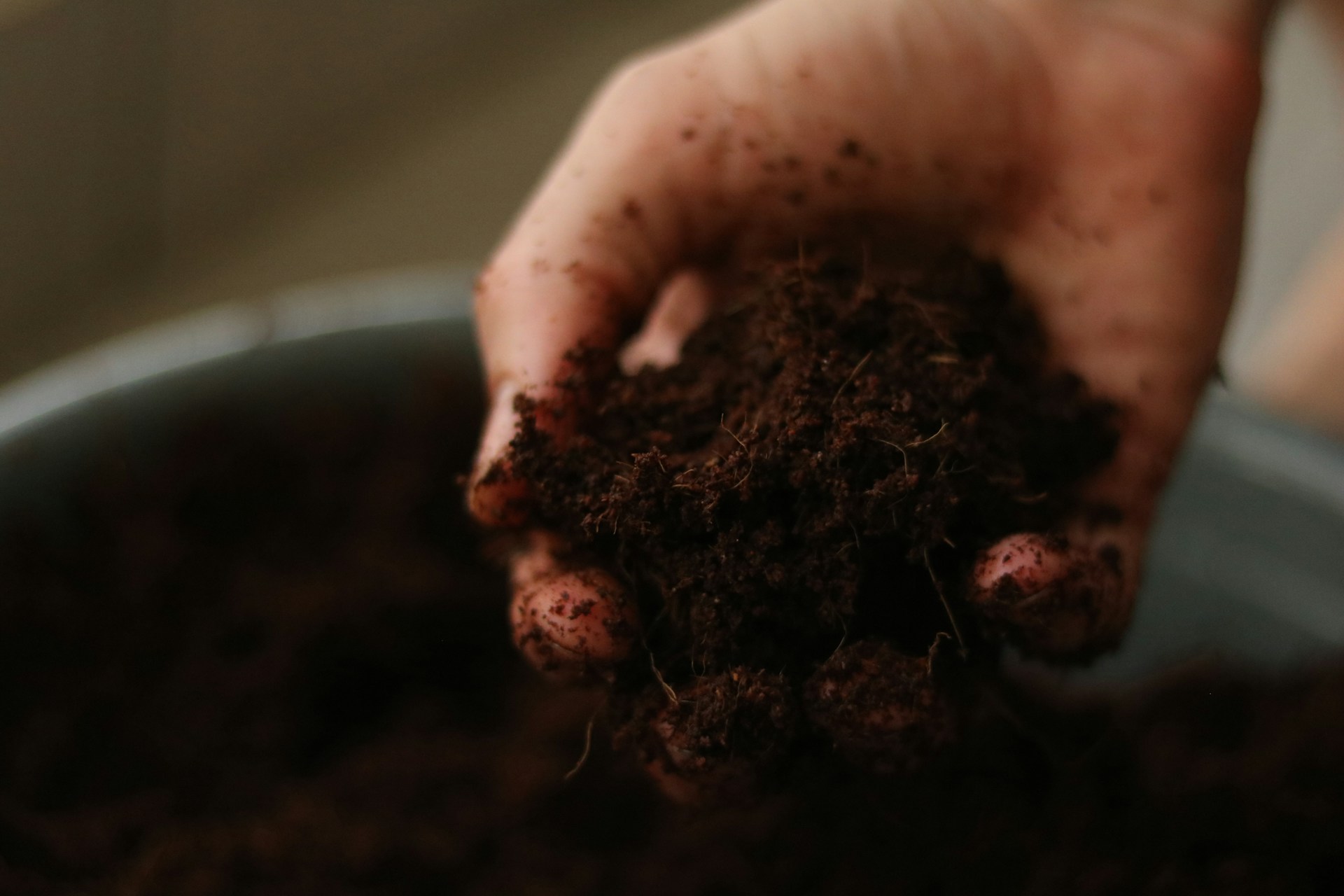
For a commercial greenhouse operation, the decision between coco peat and soil is tied to disease management, yield consistency, and long-term production costs across an entire growing season, not just convenience.
What Loam Soil Offers
Loam, a balanced mix of sand, silt, and clay, is generally considered the ideal natural soil texture for plant growth because it retains moisture while still draining well. Good loam soil also carries its own microbial ecosystem and mineral content, providing a baseline level of fertility without added inputs.
The limitation is that soil quality is inherently variable. It differs by region, degrades under repeated single-crop use, and can carry soil-borne pathogens that build up over successive growing cycles, problems that matter far more at commercial scale than in a backyard garden bed.
Why Commercial Growers Move to Soilless Substrates
This is the part general "coco peat vs soil" comparisons aimed at home gardeners tend to skip entirely, and it is the actual reason greenhouse operations increasingly choose substrates like coco peat over soil-based production.
According to Purdue University's Vegetable Crops Hotline, a resource for commercial greenhouse and high tunnel growers, soilless substrates including coconut coir offer several production advantages over soil: they eliminate dependence on arable land, they are lightweight and can be formulated to match specific crop needs, and critically, growers can ensure the substrate is free from harmful soil pathogens, something that requires active management when growing directly in soil.
This lines up with a broader pattern in commercial horticulture research. A review of soilless culture technologies in the greenhouse industry notes that the core advantage of moving away from soil production is decoupling crops from the problems inherent to soil as a natural medium, since soil is heterogeneous, can harbor pathogens, tends to degrade under continuous monoculture, and may develop salinity issues over time, according to a review of soilless culture applications in commercial greenhouses.
Side-by-Side Comparison
| Factor | Loam Soil | Coco Peat |
|---|---|---|
| Consistency | Variable by source and region | Consistent when quality-tested |
| Disease risk | Can carry soil-borne pathogens | Free from soil pathogens when properly processed |
| Reuse across cycles | Degrades under monoculture | Can be reused with proper sterilization |
| Nutrient content | Naturally present, but variable | Minimal on its own, fully controllable via fertigation |
| Water retention | Depends heavily on soil structure | High, consistent porosity when properly graded |
| Best suited for | Field cultivation, landscaping, general amendment | Greenhouse, hydroponic, and container production |
Where Blending Still Makes Sense
This does not mean loam soil has no place in a Cocovex-related supply chain. Landscaping projects, outdoor garden beds, and general soil amendment applications still benefit from blending coco peat into existing soil to improve structure and water retention, an approach covered in more detail in our guide to coco peat applications. The distinction that matters is scale and control: a home gardener blending coco peat into a raised bed has very different needs than a commercial greenhouse operation deciding whether to grow in soil at all.
What This Means for Sourcing Decisions
For greenhouse and commercial growers evaluating a shift away from soil-based production, or scaling up an existing soilless operation, the sourcing questions shift accordingly:
- Pathogen-free processing, not just nutrient content, becomes a core quality requirement
- Batch consistency matters more than it does for a soil amendment, since an entire crop cycle depends on substrate behaving predictably
- Reusability and sterilization compatibility should be confirmed if the operation plans to reuse substrate across multiple growing cycles
Sourcing Coco Peat for Commercial Greenhouse Production
Cocovex supplies coco peat processed and quality-tested in Indonesia for commercial greenhouse and hydroponic applications. Explore our coco peat block products for specifications, or get in touch to discuss substrate requirements for your production system.
Ready to Source?
Get Export-Quality Coco Peat, Direct from Indonesia
Request a sample, get a custom quote, or speak with our export team about substrate requirements for your production system.