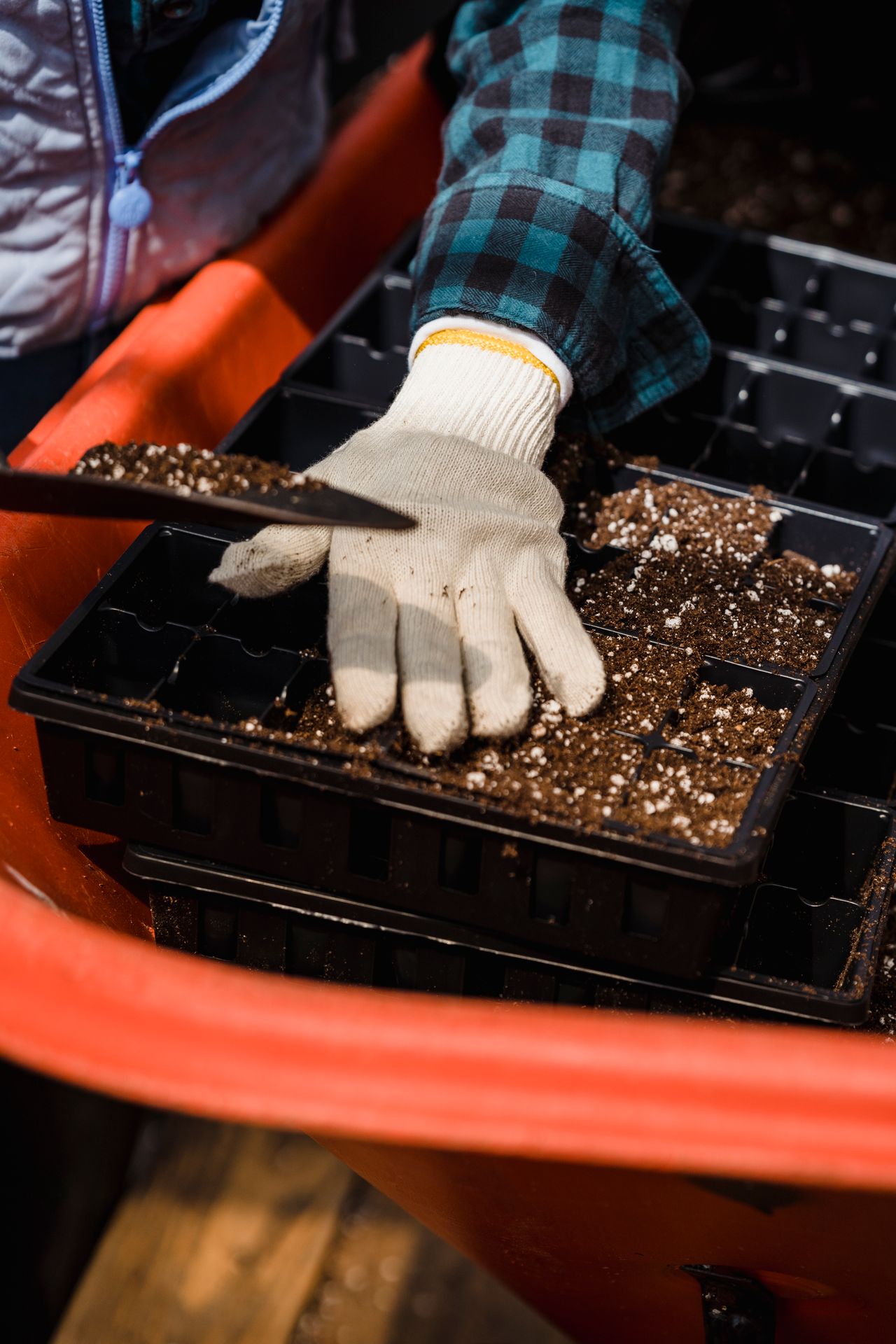
Understanding what each material actually contributes makes it easier to choose the right ratio, and the right supplier, for your operation, rather than treating one as a straight replacement for the other.
What Each Material Actually Does
Perlite and coco peat solve different problems in a growing medium, and understanding the distinction is the starting point for choosing a blend ratio.
Perlite
A lightweight, inert volcanic mineral heated until it expands into small, porous white granules. It holds essentially no water or nutrients on its own. Its role in a growing medium is purely structural: it creates air pockets that improve drainage and prevent compaction, which helps protect roots from waterlogging and oxygen deprivation. Because perlite is mineral rather than organic, it does not break down over time the way coco peat can, which makes it useful for long-term reusable systems.
Coco Peat
An organic material with genuine water-holding capacity and some ability to hold and exchange nutrients with plant roots, properties covered in more detail in our main coco peat guide. Where perlite manages drainage, coco peat manages moisture retention and provides a more root-friendly structure than perlite alone.
Blending the two is standard practice precisely because neither material alone delivers both properties well. Coco peat without any aeration additive can become compact and waterlogged in some systems, while perlite alone drains too quickly and provides no meaningful water buffering for the root zone.
The Honest Research Picture
Most articles comparing coco peat and perlite present coco peat's benefits without much nuance. A more rigorous picture comes from a controlled comparison study conducted by Utah State University's Crop Physiology Laboratory, which tested multiple commercial coconut coir brands against sphagnum peat moss, all blended with perlite, across several crop species.
The results were more mixed than typical marketing content suggests. Coir brands from Sri Lanka consistently outperformed those from Mexico, and electrical conductivity varied significantly by brand, in some cases high enough to visibly stunt sensitive crops like corn and wheat. No coir brand in the study consistently outperformed peat moss, though several performed comparably well once EC was properly managed.
This is not an argument against coco peat. It is an argument for taking sourcing seriously. The study's findings track closely with points covered in our guide to coco peat production: washing quality, EC testing, and consistent processing are what separate a coco peat product that performs reliably from one that does not, regardless of how the marketing copy reads.
Common Blend Ratios
Ratios vary by application, but a few starting points are widely used across hydroponic and container growing:
| Application | Typical Coco Peat : Perlite Ratio |
|---|---|
| General hydroponic systems | 70:30 |
| Seed starting and propagation | 50:25 (plus 25% vermiculite or fine sand) |
| Container gardening and houseplants | 60:20 (plus compost and other amendments) |
| Succulents and cacti | Higher perlite ratio, often 50:50 or more perlite |
These are starting points, not fixed rules. The right ratio depends on the crop, irrigation frequency, and container or system design.
Coco Peat vs Perlite: Quick Comparison
| Property | Perlite | Coco Peat |
|---|---|---|
| Material type | Inert volcanic mineral | Organic, coconut husk byproduct |
| Water retention | Very low | High |
| Nutrient holding capacity | None | Moderate, via cation exchange |
| Aeration contribution | High | Moderate on its own |
| Breaks down over time | No | Slowly, over multiple cycles |
| Typical role | Drainage and aeration additive | Primary water-retentive base |
What This Means for Sourcing
Given the variance documented in independent research, buyers evaluating coco peat suppliers for hydroponic use should treat EC and washing quality as non-negotiable, not as a nice-to-have.
Asking for batch-level EC data before committing to a bulk order is a reasonable and increasingly standard request, one covered in more detail in our guide to coco peat export standards.
Sourcing Coco Peat for Hydroponic Blends
Cocovex supplies washed, EC-tested coco peat suitable for blending with perlite in commercial hydroponic systems. Explore our coco peat block products for specifications, or get in touch to discuss grade and EC requirements for your growing system.
Ready to Source?
Get Washed, EC-Tested Coco Peat, Direct from Indonesia
Request a sample, get a custom quote, or speak with our export team about grade and EC requirements for your growing system.