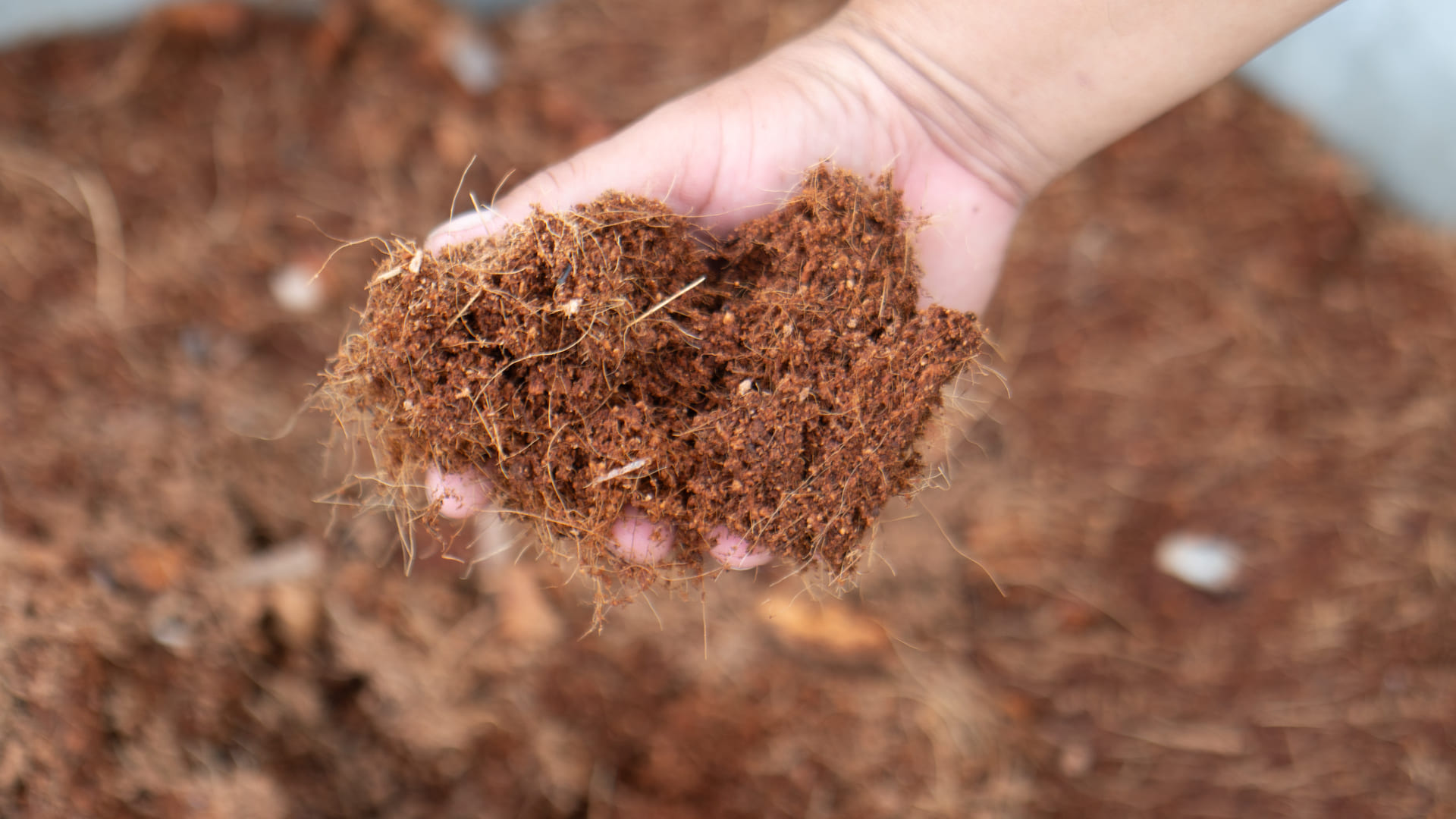
Because it affects what you actually receive on arrival, understanding the difference between coco peat and coco coir before placing a bulk order can save buyers from a costly mismatch between what was ordered and what performs well in their operation.
Clarifying the Terminology
Both terms describe material derived from the same source: the fibrous husk of a coconut. The confusion comes from how the industry has shifted its language over time. Technically, coir refers to the whole family of coconut husk byproducts, which separates into three main fractions during processing, as described in a technical overview of coco coir composition from CANNA Gardening:
- Coir pith or dust (often called coco peat), the fine, powdery fraction
- Coir fiber, the long, coarse fibers used in rope, brushes, and mats
- Coir chips, larger husk pieces used for structure and drainage
In everyday commercial use, "coco coir" has increasingly become the umbrella term for coconut husk-derived growing media in general, while "coco peat" specifically refers to the pith or dust fraction. When you are sourcing product internationally, it is worth confirming with your supplier exactly which fraction (or blend) they mean by each term, since usage is not fully standardized across exporting countries.
The Functional Difference
The three fractions behave differently as a growing medium because of their particle size and structure, and this is where the practical difference between coco peat and coco coir (used loosely to mean fiber) actually shows up.
Coco Peat (Pith/Dust)
Has a fine, capillary-rich structure that retains water effectively and releases it gradually, which is why it is favored where consistent moisture matters, such as seed germination and hydroponic root zones. Its dense structure means it packs more tightly, which can also reduce air-filled porosity if not blended with a coarser fraction.
Coco Fiber and Chips
Have a coarser structure that creates larger air pockets. This improves drainage and root aeration but retains less water on its own, according to the same CANNA overview of coco coir composition, consistent with broader particle-size research showing that finer coconut coir fractions increase water retention while reducing air-filled porosity compared to coarser fractions, as reported in a comparative study of coconut coir physical properties.
pH. Both fractions come from the same coconut husk material and are generally understood to fall in a similar mildly acidic to neutral range, consistent with the general pH range HORIBA documents for coconut coir substrate as a whole, though HORIBA's data does not break this down separately by pith versus fiber fraction.
Most commercial products are not pure single-fraction material. Blends of pith, fiber, and chips in different ratios are common precisely because they balance water retention against aeration, a combination that a single fraction alone cannot fully deliver.
Quick Comparison
| Property | Coco Peat (Pith/Dust) | Coco Fiber/Chips |
|---|---|---|
| Particle structure | Fine, powdery | Coarse, fibrous |
| Water retention | Higher | Lower |
| Aeration/drainage | Lower on its own | Higher |
| Typical use | Seed starting, hydroponic root zone, water-retentive mixes | Structural blends, drainage layers, mulch, erosion control |
| Common form | Compressed block, loose bag | Chips, mats, geotextile, rope |
Which One Should You Order for Your Application?
This connects directly to the grade guidance in our article on coco peat applications:
- Hydroponic and greenhouse growers typically want a washed, low-EC coco peat (pith-dominant) or a pith/fiber blend engineered for balanced porosity, not pure fiber
- Landscaping and erosion control buyers are usually better served by coarser fiber and chip products, or Cocovex's coco fiber line, rather than pure coco peat
- Nurseries and propagation operations generally need finer, well-sieved coco peat for consistent germination conditions
- Buyers blending their own mixes may want pith and fiber as separate SKUs rather than a pre-blended product, to control the ratio themselves
If your current supplier cannot clearly tell you which fraction (or blend ratio) is in the bag or block you're ordering, that is a reasonable question to press on before a bulk purchase, since it directly affects how the material performs once it reaches your growing operation.
Frequently Asked Questions
Is coco coir better than coco peat?
Neither is universally better. Coco peat (pith) retains more water and suits moisture-sensitive applications like seed starting and hydroponics. Coco fiber offers better aeration and suits structural or drainage-focused applications. Most commercial-grade products blend both for balanced performance.
Can I substitute one for the other?
Not always without adjusting your irrigation approach. Switching from a pith-dominant to a fiber-dominant substrate (or vice versa) changes how quickly the medium dries out and how much oxygen reaches the root zone.
Does Cocovex sell both separately?
Yes. Explore our coco peat block and coco fiber product lines to find the right fraction or blend for your operation, or get in touch to discuss a custom ratio for bulk orders.
Ready to Source?
Get the Right Coco Peat or Coco Fiber, Direct from Indonesia
Request a sample, get a custom quote, or speak with our export team about the right fraction or blend ratio for your operation.