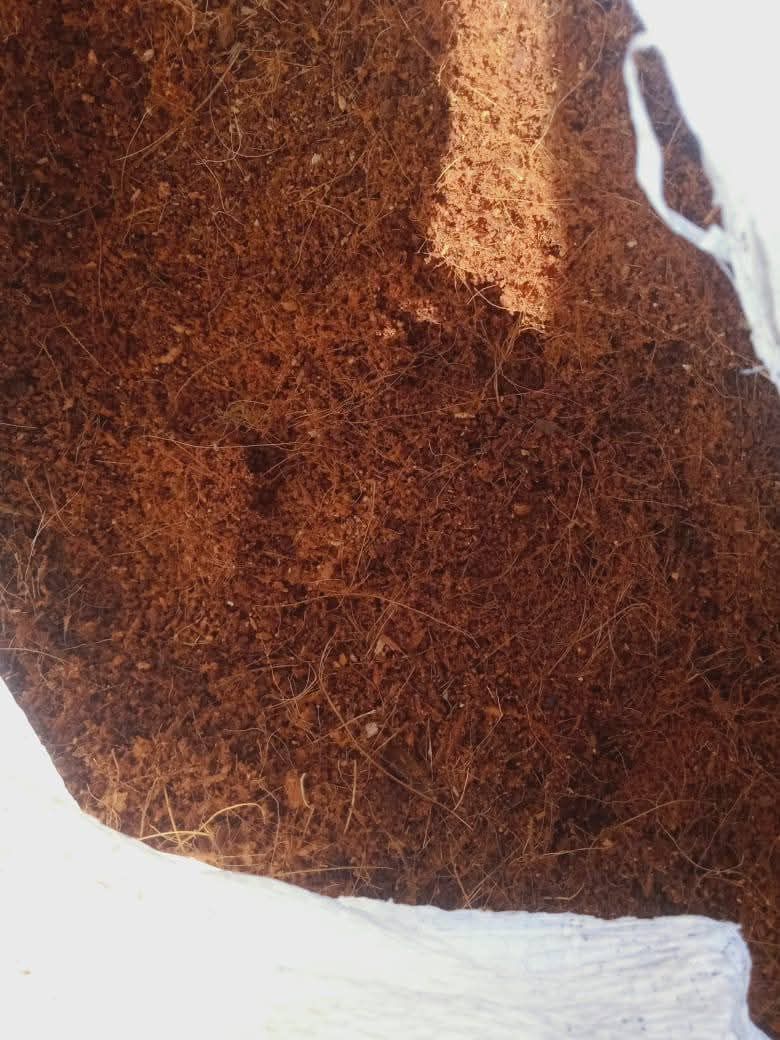
The same raw material that works well as a soil amendment for a home garden can fail in a commercial hydroponic system if the wrong grade is specified. For a related overview of what coco peat is and how it is produced, see our full guide to coco peat. This guide breaks down coco peat's applications by industry, explains which grade fits which use case, and outlines what buyers should verify before committing to a bulk order.
Applications by Industry
Coco peat's performance varies significantly depending on how it is processed and graded. Here is how each application calls for a different specification.
Hydroponic Systems
Washed, low-EC coco peat with a fine, consistent particle size is the standard choice for hydroponic and controlled-environment growing, where root zones need stable moisture without excess salt interfering with nutrient dosing. Coco coir's naturally high water-holding capacity, reported at up to roughly 66 percent in controlled trials comparing it to volcanic substrate, makes it well suited to systems where consistent irrigation timing matters, according to a study published in PMC (National Center for Biotechnology Information).
Greenhouse and Commercial Farming
Grow bags and slabs filled with coarser, blended coco peat (a mix of pith, fiber, and chip fractions) support uniform drainage and root aeration across large planting rows. A horticultural growing-media reference from PT Growers and Consumers notes that coconut coir substrate typically has a total porosity around 80 percent and an air-filled porosity near 13 percent, properties that support both moisture retention and oxygen availability for actively growing crops like tomatoes and cucumbers.
Landscaping and Erosion Control
Coarser, unwashed coco peat and coir blends are used to stabilize soil on slopes and support vegetation establishment. Because this application does not involve direct root-zone nutrient management the way hydroponics does, tighter EC control matters less here than particle structure and bulk density.
Nurseries and Seed Propagation
Finer, well-sieved coco peat is used in seed trays, discs, and pellets, where consistent moisture and a sterile starting medium support even germination.
General Potting and Soil Amendment
Loose coco peat blended with compost or existing soil improves water retention and aeration in general container gardening and landscaping soil mixes.
Choosing the Right Grade for Your Use Case
Particle size distribution is one of the most overlooked specifications buyers ask about, even though it directly affects how a substrate performs. Coco coir typically consists of particles in the range of roughly 0.2 to 2.0 millimeters, and processors separate this into distinct fractions, pith or dust, fiber, and larger chips, which are then blended in different ratios depending on the intended application, as outlined in a technical review of coco coir substrate composition on CANNA Gardening's technical resources.
Research comparing coconut coir to peat has also shown that particle size in the roughly 0.125 to 1 millimeter range produces a measurable change in a substrate's physical behavior for coir specifically, since finer particles increase water retention but reduce air-filled porosity, according to research summarized in a comparative study of coconut coir physical properties, citing findings from Abad et al. (2005). In practice, this means a grade optimized for hydroponic water retention is not automatically the right grade for a landscaping application that needs faster drainage.
A simplified way to match grade to use case:
| Use Case | Recommended Grade | Priority Property |
|---|---|---|
| Hydroponics | Fine, washed, low EC | Consistent moisture, low salt |
| Greenhouse grow bags | Blended pith/fiber/chip | Balanced porosity and drainage |
| Landscaping / erosion control | Coarse, unwashed | Structural stability |
| Seed propagation | Fine, sieved | Sterility, even moisture |
| General potting mix | Loose, medium grade | Aeration plus water retention |
What Buyers Should Verify Before Bulk Purchase
Beyond the export documentation covered in our main coco peat guide, buyers sourcing for a specific application should confirm a few use-case-specific details before placing a bulk order:
- EC and salinity data for the specific batch, not just a general product spec sheet, particularly for hydroponic or salt-sensitive applications
- Particle size distribution or grade classification, since suppliers may use different internal naming conventions for what counts as fine versus coarse
- Whether the product is washed or unwashed, since this affects both salinity and appropriate use case
- Batch-to-batch consistency data, especially for commercial greenhouse operations where inconsistent substrate behavior across a growing season can affect yield uniformity
Suppliers who can answer these questions with documentation, rather than general assurances, are generally the more reliable long-term sourcing option for commercial-scale buyers.
Sourcing Coco Peat for Your Application
Cocovex processes coco peat in Indonesia for multiple downstream applications, from hydroponic-grade fine substrate to coarser grades suited for landscaping and erosion control. Explore our coco peat block products for grade specifications, or get in touch to discuss the right grade for your specific use case.
Ready to Source?
Get the Right Coco Peat Grade, Direct from Indonesia
Request a sample, get a custom quote, or speak with our export team about the right grade for your specific use case.