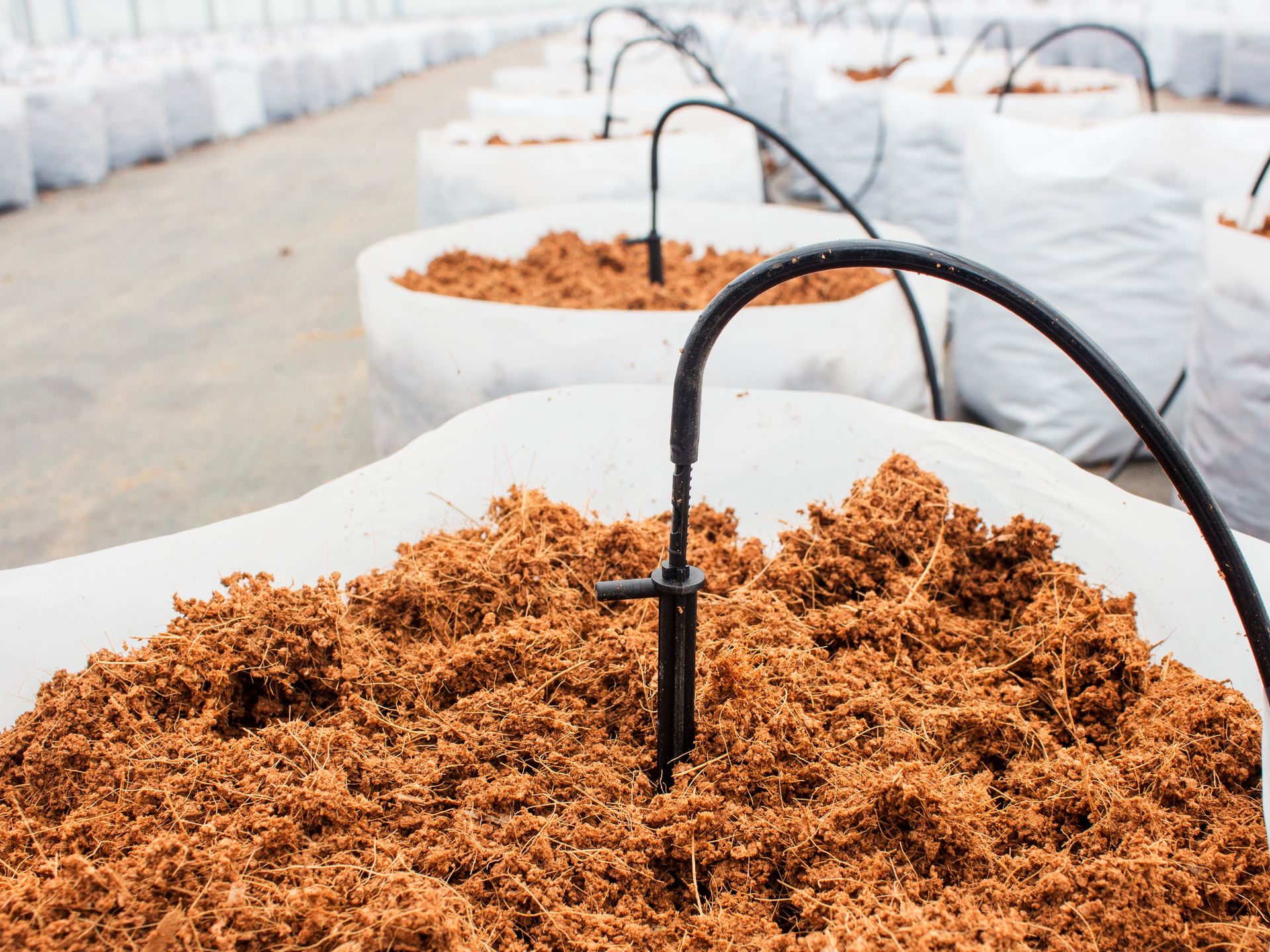
Coco peat, also known as coir pith or coir dust, is the fine, spongy material left over after coconut husks are processed to extract long coir fiber. For decades this material was treated as industrial waste. Today it is one of the most widely traded growing media in the world, used in greenhouse operations, hydroponic systems, landscaping, and commercial nurseries across dozens of countries.
For buyers evaluating coco peat as a growing medium or sourcing it for import, understanding what it actually is, how it behaves chemically, and what quality standards apply makes the difference between a reliable supply chain and a costly sourcing mistake.
How Coco Peat Is Made
Coco peat comes from the outer husk of the coconut. When husks are processed to extract coir fiber (used for rope, brushes, and mats), the leftover pith is separated, washed, dried, and graded. Depending on the intended market, it is then compressed into blocks or bricks for export, left loose for local potting mixes, or packed into grow bags for commercial cultivation.
The compression stage matters more than most buyers realize. A properly compressed block reduces shipping volume dramatically while still expanding back to several times its size once rehydrated, which is why block form dominates the export trade.
Physical and Chemical Properties
Coco peat's usefulness as a growing medium comes down to a few measurable properties that buyers should always ask about before purchasing in bulk.
pH & EC
Coco peat typically falls in a mildly acidic to neutral pH range, keeping most nutrients readily available. Testing pH and electrical conductivity (EC) before use is standard practice, since EC indicates salt content built up during processing.
Cation Exchange Capacity
Measures how well a substrate holds and releases nutrient ions. Coco peat sits in a useful middle range compared to inert substrates like rockwool, buffering minor fertigation inconsistencies during production.
Washed Coco Peat
Lower EC, suited for hydroponic systems and salt-sensitive crops that require a clean, low-salt root environment.
Unwashed Coco Peat
Retains higher natural salt content, generally reserved for landscaping or less sensitive applications.
The washed-vs-unwashed distinction is one of the most important questions a buyer should raise with any supplier, since it directly affects crop performance on arrival.
Sources: HORIBA — pH & conductivity in coconut coir substrate · HortGrow — Coco coir CEC overview
Types and Grades of Coco Peat
Coco peat is sold in several forms depending on the buyer's use case:
Compressed Blocks or Bricks
The standard export format. Compact for shipping, expanding several times in volume once hydrated.
Loose Coco Peat
Ready to use for potting mixes without a rehydration step.
Grow Bags
Pre-filled bags used directly in commercial greenhouse rows for crops like tomatoes and cucumbers.
Discs & Pellets
Compact units designed for seed germination trays and nurseries.
Grade also varies by particle size and fiber content, which affects drainage and aeration. Buyers sourcing for hydroponic operations generally need a finer, more consistent grade than those buying for landscaping or erosion control.
Coco Peat vs. Peat Moss: Why Demand Is Shifting
A large part of the growing global demand for coco peat comes from sustainability pressure on traditional peat moss. Peat moss is harvested from peat bogs, which function as major long-term carbon stores. A peer-reviewed review published in PMC (National Center for Biotechnology Information) reports that peatland drainage and extraction contribute a meaningful share of global methane emissions and have already caused significant habitat loss in tropical peat regions, adding pressure on the horticulture industry to find replacement substrates.
Coco peat, as a byproduct of an existing agricultural industry rather than an extracted resource, is increasingly positioned as that replacement, particularly in markets where retailers and municipalities are moving toward peat-free growing media requirements.
Export Quality Standards and Certification
This is the part most general guides to coco peat skip entirely, and it is often the first question a serious international buyer will ask.
Growing media, including coco peat, is classified as a regulated agricultural commodity in most import markets. According to the Food and Agriculture Organization of the United Nations (FAO), importing countries require phytosanitary certificates for regulated articles including growing medium, confirming that a shipment has been inspected and meets the importing country's plant health requirements before it is allowed entry.
For a buyer, this means a legitimate coco peat exporter should be able to provide, at minimum:
- Phytosanitary certificate — valid for the destination country
- EC and pH test results — documented per batch or shipment
- Clear labeling — of washed vs. unwashed product
- Consistent packaging specs — block dimensions, weight per bale, units per container
Suppliers who cannot answer these questions directly are worth treating with caution, regardless of how competitive their pricing looks.
Applications by Industry
Coco peat's properties make it suitable across a wider range of industries than most buyers initially expect:
Quick Comparison: Coco Peat vs. Common Alternatives
| Property | Coco Peat | Peat Moss | Perlite |
|---|---|---|---|
| Source | Coconut husk byproduct | Extracted from peat bogs | Volcanic mineral |
| Renewability | Renewable, byproduct of existing industry | Slow to regenerate, extraction-based | Mined, finite |
| Water retention | High | High | Low, improves drainage |
| Typical pH | Mildly acidic to neutral | Acidic | Neutral |
| Common use | Hydroponics, greenhouse, landscaping | Potting mixes, soil amendment | Aeration additive, mixed with other media |
Sourcing Coco Peat for Bulk or Wholesale Import
For businesses sourcing coco peat at scale, the priority shifts from general product benefits to supply chain reliability: consistent EC and pH across batches, valid export documentation, and packaging suited to container shipping.
Manufactured and processed in Indonesia
Cocovex supplies compressed coco peat blocks manufactured and processed in Indonesia for international buyers, with documentation and quality specifications available on request.
supplied
Ready to Source?
Get Export-Quality Coco Peat, Direct from Indonesia
Request a sample, get a custom quote, or speak with our export team about your volume and spec requirements.